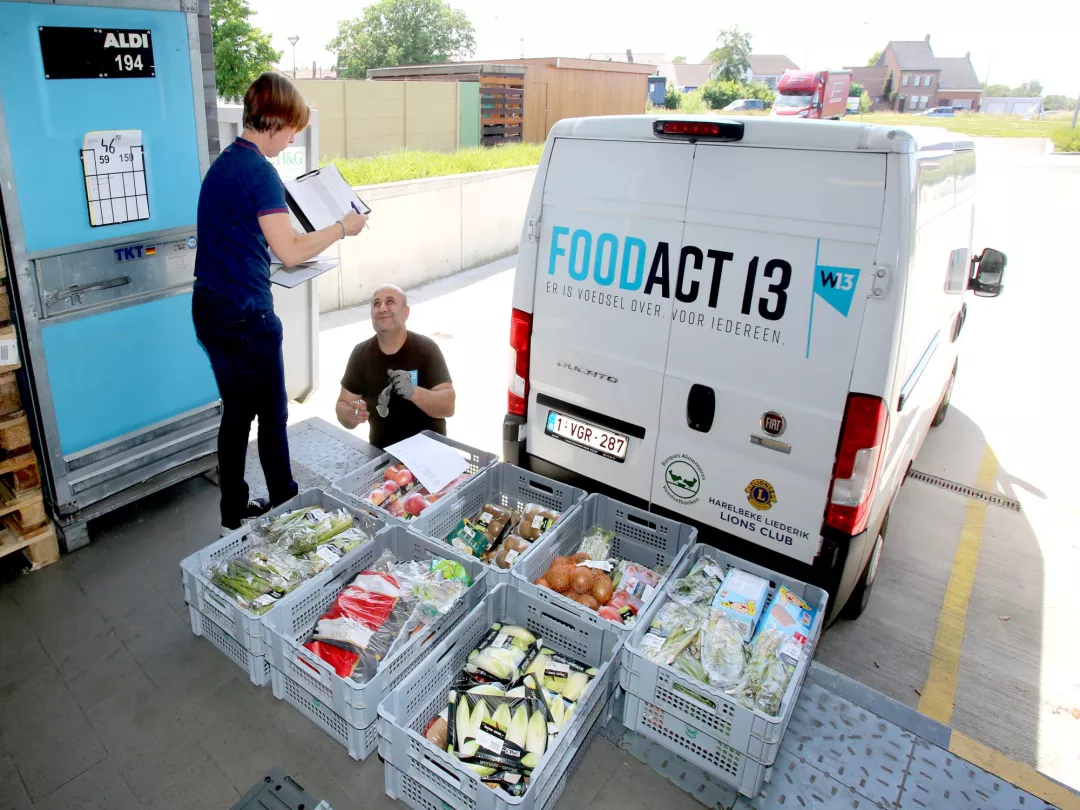
An initiative of W13, the intermunicipal welfare association for South West Flanders, Food Act 13 collects, sorts and redistributes surplus food to food distribution organisations and social initiatives in the region. Rapid growth prompted the need for new infrastructure that better meets current and future requirements. That is why Food Act 13 is now preparing to move to larger premises, with greater processing capacity, professional cold storage and freezer facilities, purpose-built logistics and plenty of space for administration and meetings.
With a sustainable and future-oriented development specifically in mind, Food Act 13 opted for guidance through ECOBoost, a European Interreg project that supports small enterprises and organisations in their energy transition by offering technical expertise, energy advice, knowledge sharing and guidance on investment decisions. ECOBoost helps organisations to reduce their energy consumption and carbon emissions, and to speed up their journey towards a climate-neutral future. Leiedal, the intermunicipal organisation for regional development in South West Flanders, proposed that Food Act 13 be supported within ECOBoost. We spoke with Food Act 13 about their road to new, sustainable infrastructure.
Set in motion at turning point
“The planned move was a real tipping point for us,” says Arnout Vercruysse, co-ordinator with Food Act 13. “We faced the challenge of building a completely new infrastructure that not only offers sufficient capacity today, but is also ready for future growth. We didn’t want to treat sustainability as an add-on investment made after the fact, but as a fundamental part of the design. These are choices that have a major impact on day-to-day operations and running costs further down the line, so we thought it important to have experts guide us.”
The decision to join the project evolved through discussions within W13. The board of directors actively sought partners who could contribute expertise in infrastructure, sustainability and energy efficiency. As it turned out, the greatest challenge was not the ambition, but the technical complexity of the project:
“Within W13, we have plenty of knowledge about welfare and social services, but are less familiar with specialised construction and energy expertise. Thanks to Leiedal’s support, we were able to fill that gap. Our operations rely heavily on refrigerated storage and food processing. The new building will boast a cold sorting area, a cold store, a freezer room and a bread-processing space. This infrastructure is essential for food safety reasons, but also requires a considerable amount of energy. The challenge there was to organise all functions as energy-efficiently as possible, while at the same time building an efficient logistics operation.”
Turning needs into design
“Together with Leiedal, we first mapped out our operational needs, on the basis of which a design was developed that supports our logistical processes and offers sufficient flexibility for the future. We explored several technical scenarios, consulted suppliers and set up visits to organisations with similar operations, such as Foodsavers Ostend. Regular meetings allowed us to align the design, technologies and practical needs step by step.”
“ECOBoost has made us realise that sustainability is not about separate technologies, but about cleverly combining systems into one whole.”
The support, however, entailed far more than mere energy advice. Leiedal brought in expertise in building design, technical installations, energy recovery and tender preparation. One particularly valuable insight, which might never have been discovered or acted upon without an outside perspective, was the possibility of recovering waste heat from the refrigerating systems and using it to heat the administrative areas.
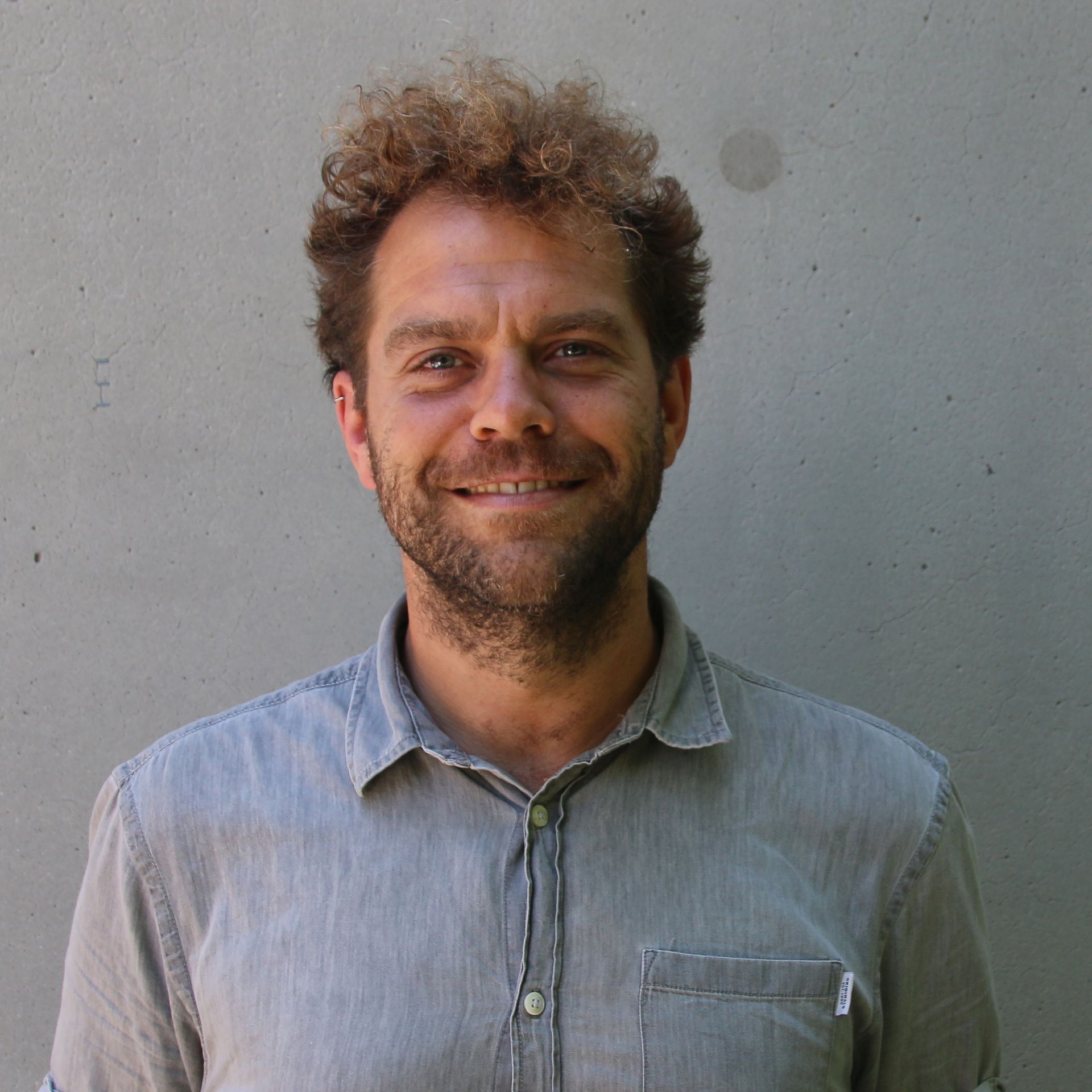
Arnout Vercruysse: “Without external expertise, we would have had far less insight into the possibilities of energy recovery, sustainable refrigeration and the optimal integration of different technologies. Translating our operational needs into a technically and economically feasible design would also have been considerably more difficult. The support turned out to be broader than expected. In addition to technical assistance, they actively contributed ideas on the building layout, the flow of goods, the selection of technologies and the drafting of the specifications. Right now, we are keenly looking forward to the next phase, in which a contractor will be selected by way of public procurement. The focus of the project was mainly on developing a technically strong and future-proof scheme. Even so, the studies, technical choices and calculations produced during the process serve as a solid basis for supporting future funding and subsidy applications.”
“Thanks to ECOBoost and Leiedal, we were able to turn our sustainability and social ambitions into a concrete, technically sound and future-proof project.”
First steps, looking ahead
The first step is the construction of the new building, which will integrate a cold sorting area, a cold room, a freezer room, a bread-processing area and an administrative floor. With this build, Food Act 13 is going as far as possible for energy efficiency, energy recovery and a sustainable layout. As construction is yet to begin, no concrete savings figures are available at this stage. However, the organisation does expect more efficient energy consumption, lower operating costs, better use of the available space and a more streamlined logistics flow. In the long term, this should contribute to both economic and environmental gains. Even so, the trajectory has also had an impact on matters other than energy.
“Absolutely. The trajectory has helped us to scrutinise our entire operation. Besides energy, we have also looked at logistics, food safety, storage capacity, work organisation and growth opportunities. As a result, investment decisions are now regarded much more from an integrated, long-term perspective. Through Leiedal and ECOBoost, we also came into contact with technical experts, suppliers, contractors and organisations facing similar challenges. A visit to Foodsavers Ostend provided valuable insights that we can carry over into our own operations. Within five years from now, we hope to have modern infrastructure that is fully aligned with our social mission. We want to be able to process and distribute more surplus food, while limiting our ecological footprint and further improving our energy efficiency. That is where the ECOBoost programme provides an important starting point.”
“Even more than to save energy, the programme helps you to take better investment decisions.”
In conclusion, asked why Food Act 13 would recommend that other businesses in the region join the ECOBoost programme in a later phase, Arnout Vercruysse answers:
“Although many organisations do have an ambition to operate more sustainably, they are short of time or expertise to make the right choices. ECOBoost offers access to knowledge, guidance and hands-on experience that help turn sustainable ideas into real and achievable projects. This is, after all, of great value for your business to take the right decisions. Moreover, the impact of this project goes beyond energy and infrastructure alone. It is about added value for society.”
“To us, sustainability is about more than simply using less energy. It is about rescuing food, giving people opportunities and empowering social organisations. If our new infrastructure enables us to redistribute more food, to work more efficiently and to generate greater social impact, then we’re not just investing in a building, but in the future of our region.”