As part of the EU’s ECOBoost project, the participating businesses in Hesse were supported by energy experts during the first pilot phase, and their individual starting points were analysed. The individual energy reports have now been presented, highlighting opportunities for further efficiency improvements and long-term energy development.
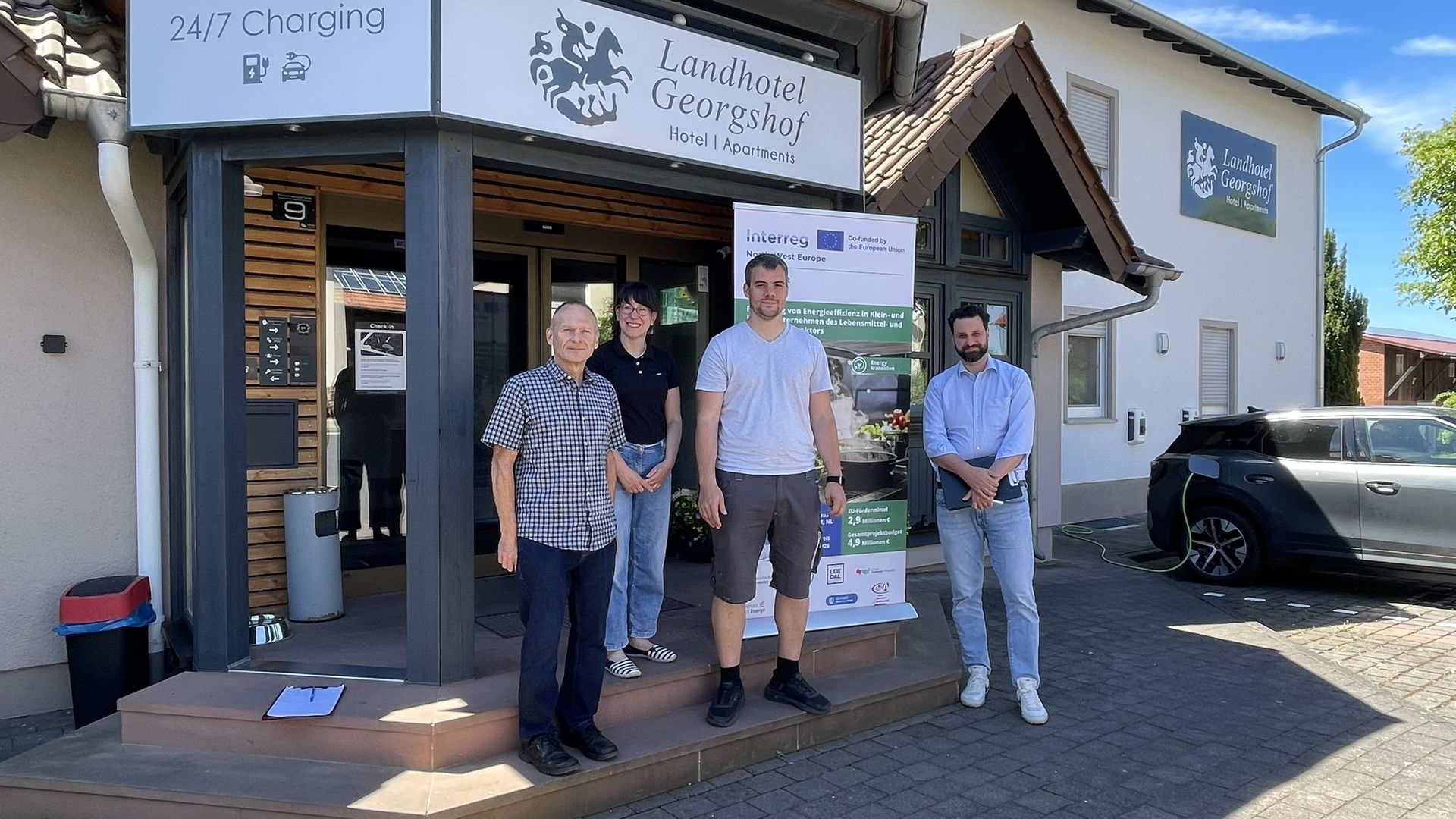
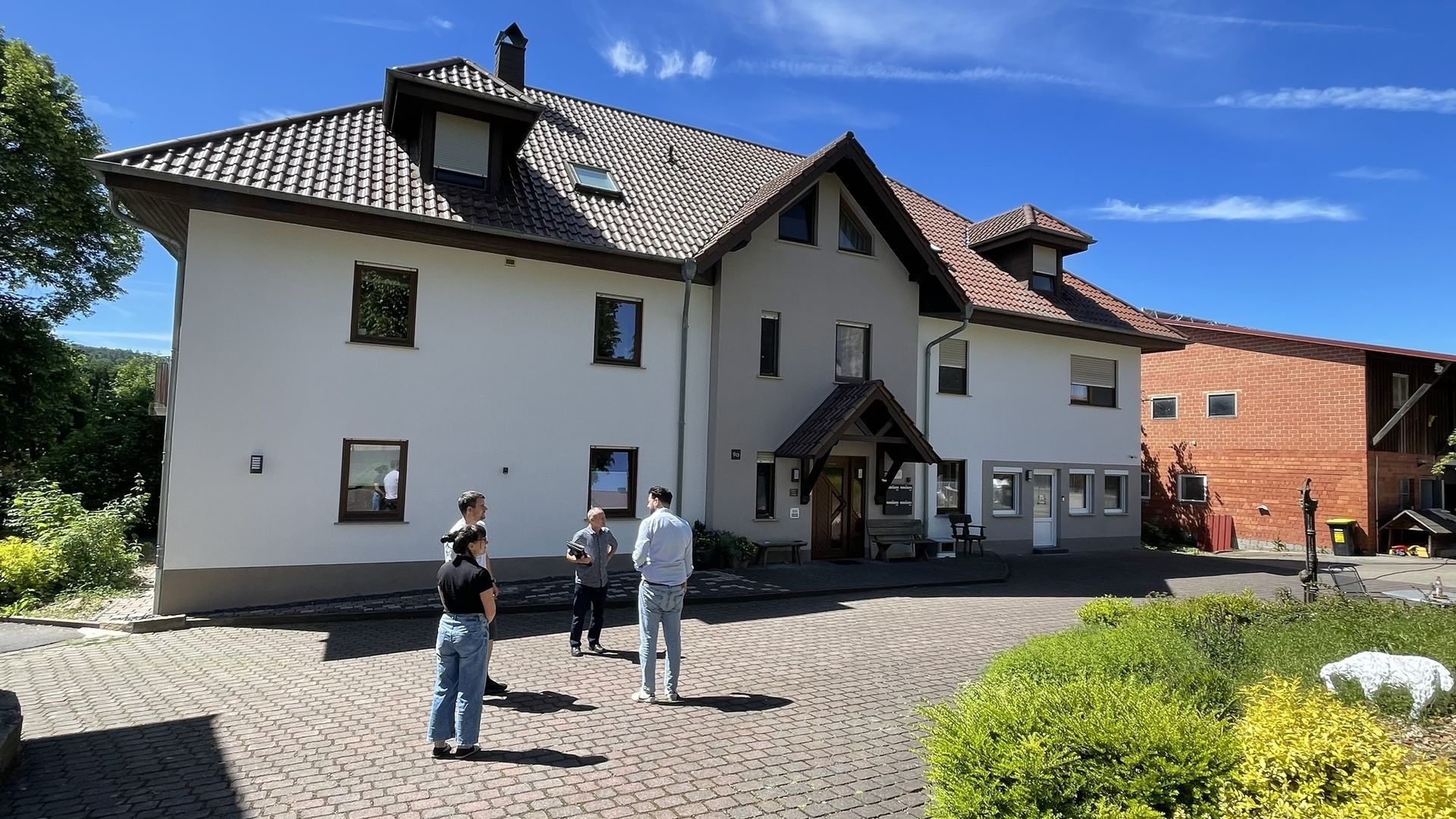
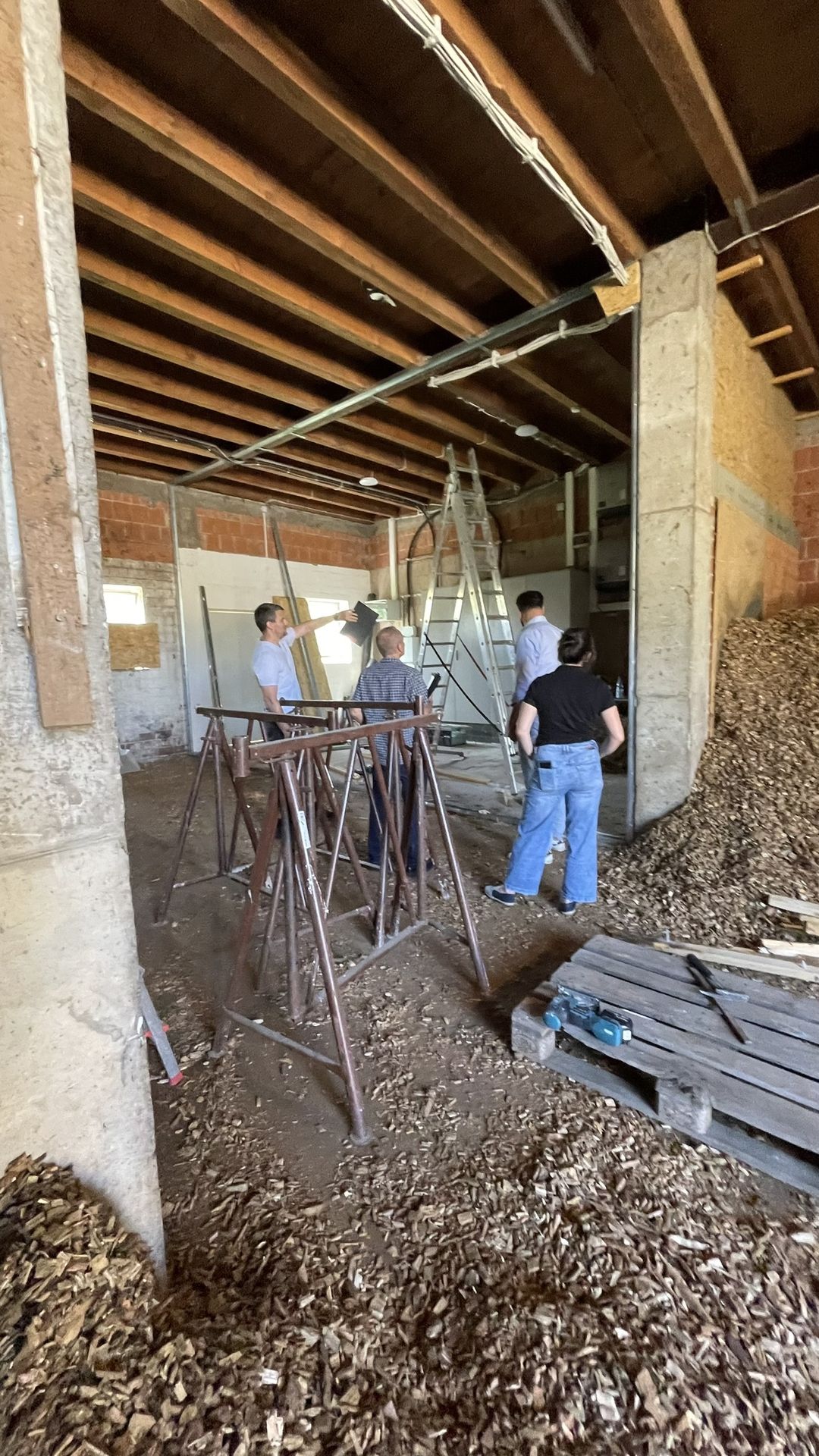
On-site appointment (from left to right): Roger Kautz (ibk), Jennifer Bröckel (House of Energy), Niklas Schaum (LandhotelGeorgshof) and Sasa Petric (RKW Hessen)
Identifying potential and making targeted use of it
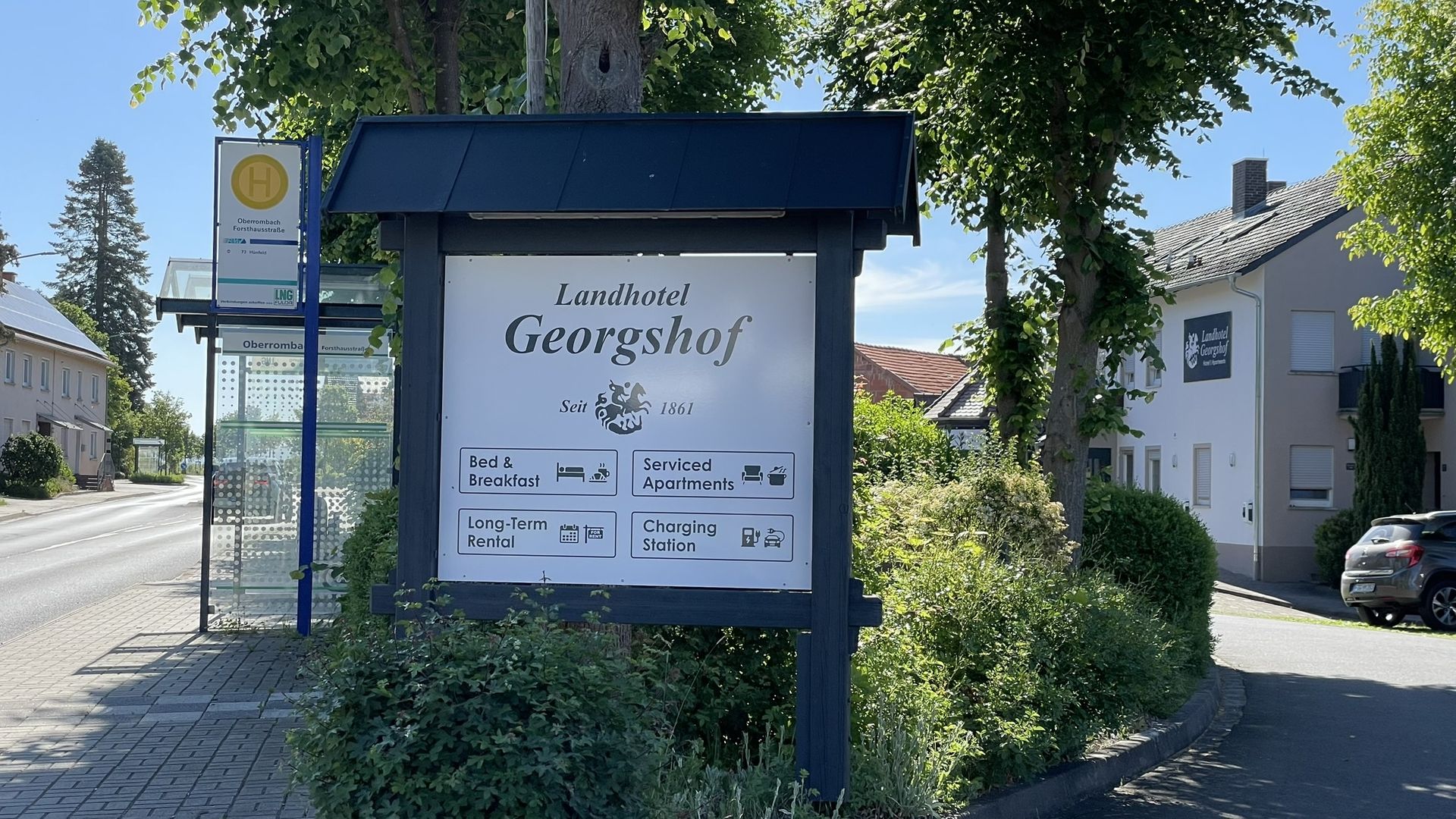
One such business is the Landhotel Georgshof in Hünfeld, which, in collaboration with the House of Energy, RKW Hessen and the Ingenieurbüro Kautz, has taken a closer look at its energy consumption and potential savings. The focus was not only on technical aspects, but also on the challenges businesses face when implementing energy efficiency measures and how these can be overcome.
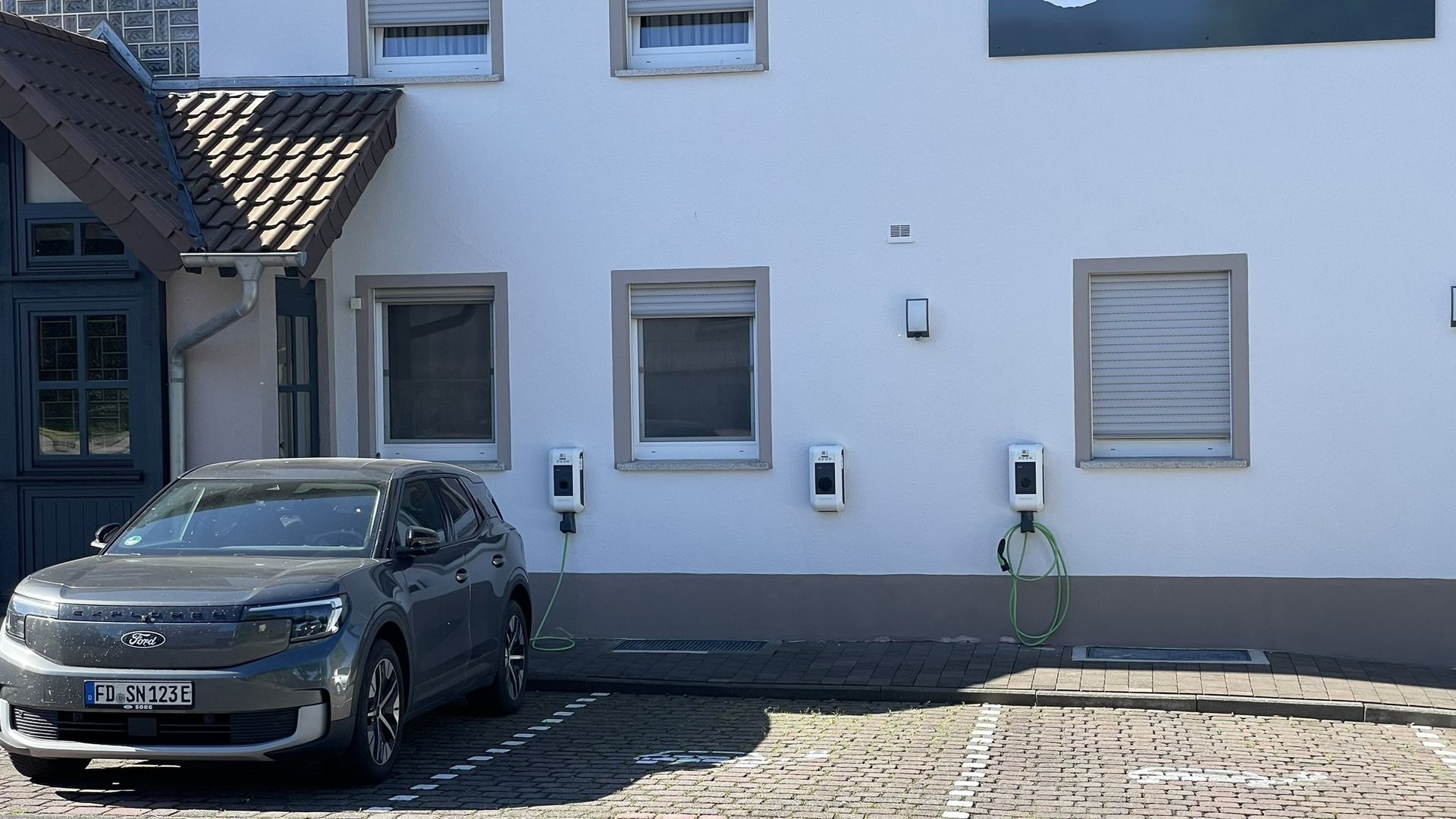
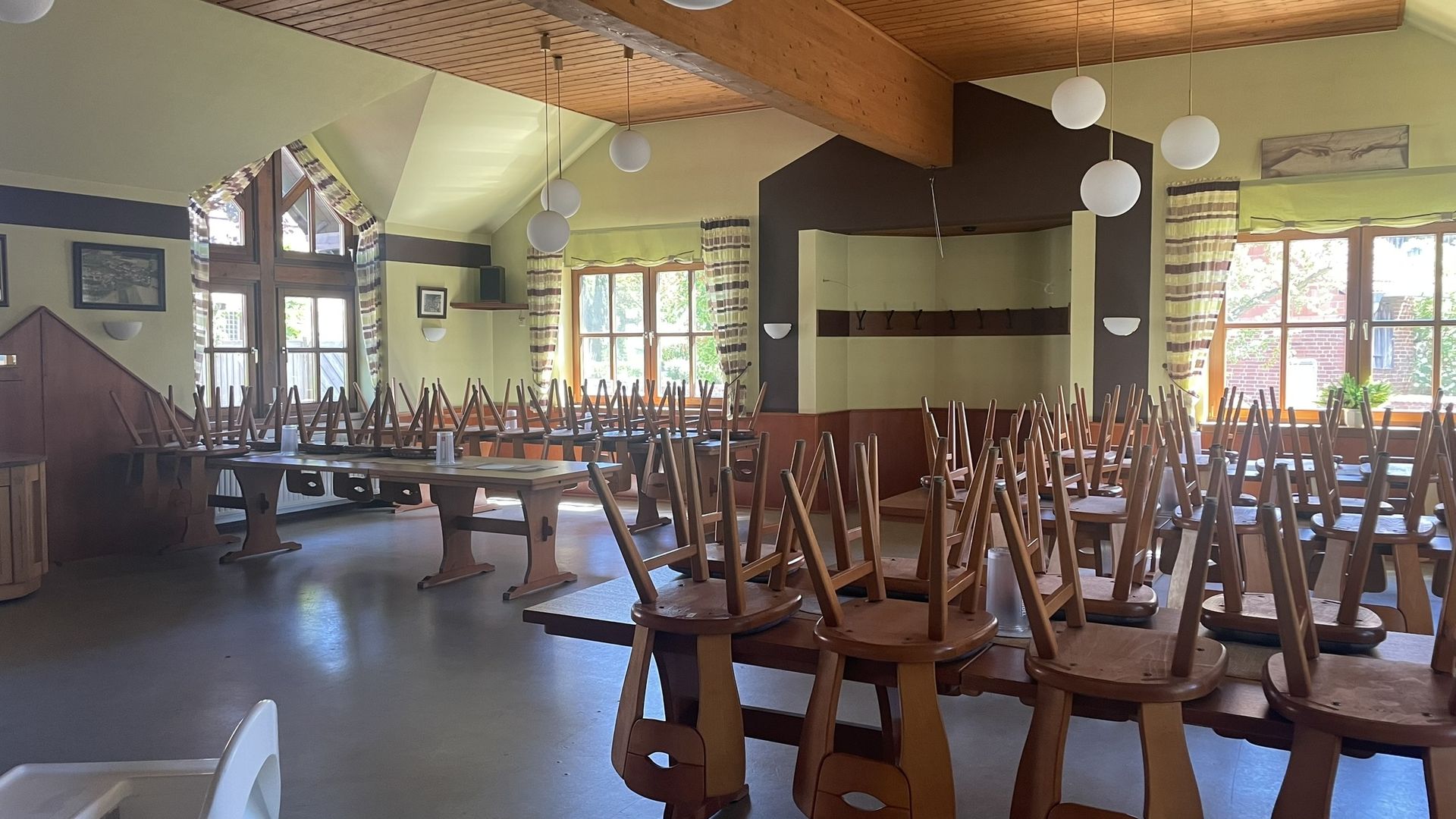
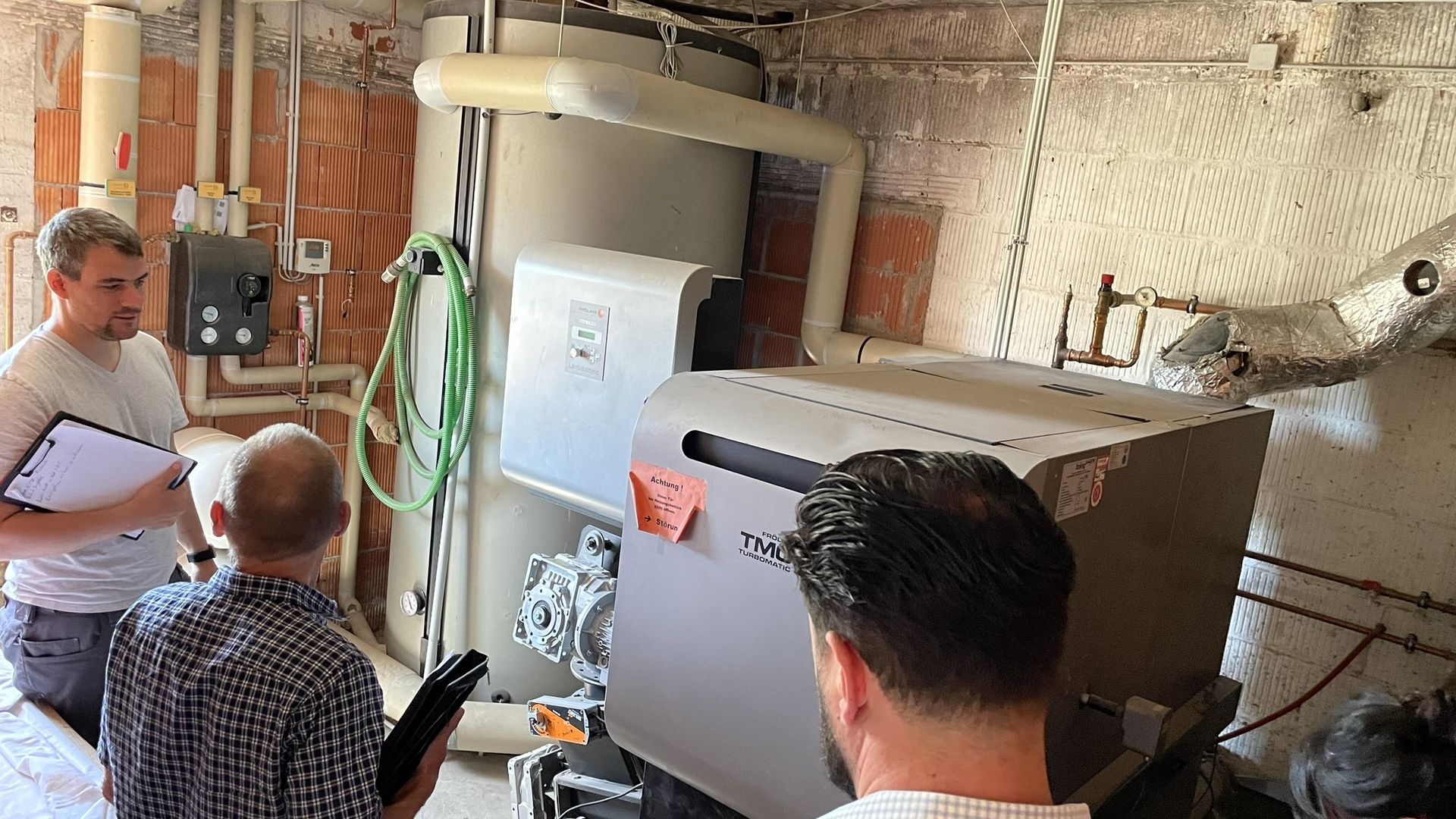
The Landhotel Georgshof has 20 beds in 13 rooms as well as two holiday flats and consists of a main building comprising several sections built between 1968 and 1999. Various modernisation measures have already been carried out in recent years, including the replacement of windows and the installation of a wood chip heating system connected to a local heating network. Other measures were not implemented for economic reasons.
“As a family-run hotel, we have long been committed to sustainable energy supply. We have already achieved a great deal with our wood chip heating system, which we run using wood from our own woodland, and our solar panels. The energy consultancy provided as part of the ECOBoost programme has shown us where we can make even more efficient use of our existing systems.”
Niklas Schaum, owner, Landhotel Georgshof
Guidance for future investments
Smaller businesses in particular face several challenges at once when planning energy efficiency measures. As well as the question of which investments make economic sense, there is often a lack of time to examine technical solutions, grant schemes and financing options in depth. At the same time, it is often difficult to identify the measures best suited to one’s own business and to realistically assess their benefits.
The personalised consultancy provided as part of the ECOBoost project addressed precisely these issues. Through an analysis of the current situation and a technical assessment of potential measures, the Landhotel Georgshof was given a sound basis for further decisions on the path towards greater energy efficiency and sustainability.
Energy consultancy highlights potential in the heating sector
The analysis shows that the Georgshof has already taken significant steps towards a sustainable energy supply. At the same time, further opportunities for optimisation have been identified which can help to reduce energy consumption and strengthen the business’s long-term profitability.
“A key finding of the consultancy was that our greatest potential for savings lies not in electricity, but in heating. In the short term, for example, we can save energy by using smart heating thermostats that adjust according to room occupancy and more efficient circulation pumps. For us as a hotel, heating our guest rooms according to actual demand is a particularly interesting approach to combining energy efficiency with guest comfort.”
Niklas Schaum, owner, Landhotel Georgshof
The greatest potential for savings in future lies in the area of heating. As measures that can be implemented in the short term, the energy advisers recommend the use of smart heating thermostats and the replacement of older circulation pumps with modern, high-efficiency pumps. Both measures can be implemented with relatively little effort and can significantly reduce energy consumption. In addition, further opportunities for optimisation have been identified.
“The economic analysis of various heating systems was particularly valuable to us. Our wood chip heating system, which is almost 20 years old, continues to operate very cost-effectively thanks to our own fuel supply. The consultation has shown that a modern wood chip heating system is currently a viable economic option, whilst heat pumps, in combination with our photovoltaic system, also remain a long-term option. ECOBoost helps us to assess such investments not only in terms of technical feasibility, but above all in terms of their actual cost-effectiveness.”
Niklas Schaum, Owner, Landhotel Georgshof
Exchange and knowledge transfer at the ECOBoost practical seminar
The next step will see the participating companies come together for an ECOBoost masterclass in November. There, they will receive information on grant and funding opportunities, learn about practical examples and exchange ideas with experts and other businesses. Information on grant and funding opportunities, in particular, is crucial for many businesses in order to actually be able to implement the measures that have been identified.
Findings are incorporated into the digital support services
The findings from the consultations with all five European project partners are also being incorporated into the further development of the digital ‘Energy Transition Navigator’. The tool is designed to help small and medium-sized enterprises in the hotel and catering sectors to more easily identify suitable measures for their energy transition in future and
For more insights into the German pilot region, please follow the German LinkedIn channel.